Showing posts with label writing. Show all posts

22.7.26

How to Write a Goodbye Letter to Depression: A Recovery Writing Exercise

Saying Goodbye to the Voice That Told You to Disappear

Depression often speaks in commands: withdraw, stay quiet, numb yourself, trust no one, and disappear before anyone has the chance to hurt you.

At first, isolation may feel protective. It can create distance from conflict, anger, rejection, and painful memories. Yet the same walls that appear to keep danger out can also separate us from the people, routines, and sources of support that help recovery take root.

Writing a goodbye letter to depression is one way to make that hidden conversation visible. The purpose is not to pretend that depression can be dismissed through willpower or a few forceful sentences. Rather, the exercise allows a person to identify depression’s language, confront the coping patterns it encouraged, and reclaim authority over the story.

A goodbye letter may include grief, anger, humor, accusation, insight, and hope. It can name unhealthy attempts to numb pain without turning those choices into moral failures. It can also acknowledge what has helped: therapy, trusted friends, family members, recovery communities, creative work, and the decision to ask for help.

In the following letter, Milo addresses depression as an unwanted tenant who has occupied too much space for too long. Drawing upon the language and mythology of The Wizard of Oz and Wicked, Milo transforms a private struggle into an eviction notice. Depression is placed on notice: it may have influenced the past, but it will no longer be permitted to speak with unquestioned authority.

Goodbye Letter

Dear Depression:

I withdraw to feel better. To numb.

I isolate to protect myself from those who can—or could—hurt me. To prevent myself from experiencing triggers. To prevent myself from feeling anger.

But anger is on the opposite end of the emotional spectrum from depression. That is something you never told me. It is something I had to discover for myself.

To feel better, I had to seek help from other people: my friends, family members, confidants, and therapist.

Had you told me the true source of my sadness, perhaps I could have begun healing sooner. But you did not. Instead, I sank further and further into depression without recognizing the damage it was causing to my body and mind.

I searched for unhealthy ways to cope. At different points, I tried to numb myself rather than confront what I was feeling.

Those choices were hurting me. They were slowly eating away at my body and soul.

But I have learned that depression has a language. It has its own vocabulary.

I have been in therapy for fifteen years, and I am only now becoming aware of how much damage you have done to my body and mind. I hate that about you.

I am expressly asking you to vacate these premises.

Be gone.

You have no power here—just as Glinda tells the Wicked Witch.

But even Elphaba is a victim of isolation. We share that in common. Elphaba, however, uses her rage to advocate for the Animals of Oz.

I have been obsessed with the lore of Oz all my life.

Now I understand why.

So I ask you to depart. I am choosing peace, recovery, connection, and the tools that help me remain well. You are no longer permitted to convince me that isolation and numbness are the only ways to survive.

Consider this document your official eviction notice.

—Milo


A Note on Recovery: Reflective writing can support healing, but it is not a replacement for therapy, medical care, or a relapse-prevention plan. A goodbye letter may be most useful when shared with a trusted therapist, counselor, recovery professional, or support person.

If you are in crisis call or text 988.

5.5.24

Phoenix Literary Journal 2024 — Garden School Students’ Poetry, Prose & Art Showcase

The Phoenix is the student literary publication of the Garden School.
Note:
The Phoenix is a literary journal edited by Greig Roselli. This collection of works showcases the creativity of students and associates of the Garden School, a NYSAIS-accredited Nursery–Twelfth-grade independent school in Jackson Heights, Queens. Founded in 1923 to serve residents of the nearby Garden Apartments—the first of their kind in New York City—the school has grown far beyond its origins as a neighborhood country-day school. Today it remains a steady presence in the borough, welcoming a diverse cohort that reflects the city’s charm and vibrancy within a warm, supportive environment.

Please consider this special issue a small token of thanks to the denizens of this school—and a testament to what Audre Lorde once wrote:
and when we speak we are afraid
our words will not be heard
nor welcomed
but when we are silent
we are still afraid
so it is better to speak

3.4.24

Exploring Cuneiform Tablets at the NYPL: The Ancient Roots of Homework

Hey, y’all. I’m at the 42nd Street Stephen A. Schwarzman Library on Fifth Avenue in Manhattan, discovering the treasures within. 
Today, I’ve found some intriguing tablets written in cuneiform. As many of you know, I’ve been a teacher for 13 years, and every year, I get a question that’s especially popular among middle, but also high school students: “Who invented homework?” 
 A fascinating answer might be the Mesopotamians or Babylonians. The tablets we’re talking about were used by students for writing practice, likely within the home of a scribe or a master. The pieces you’re seeing now are mainly literary texts that the students were required to copy and submit as demonstrations of their skill. There’s also a tablet featuring mathematical equations among them. Yes, the New York Public Library has a significant collection of these cuneiform tablets. 
• 
Pro tip: The Morgan Library on Madison Avenue also has an impressive collection of these ancient educational artifacts. So, indeed, do your homework, kids.

1.12.23

Analysis: Freud, Derrida and the Magic Slate

Do you remember playing with a magic slate as a child? Learn how Sigmund Freud uses this device to talk about the unconscious mind.
Photograph of “Iki-piirto” writing pad, a Finnish variety of Printator, known in German language as “Wunderblock”, as described by Sigmund Freud in his essay “A Note upon the ‘Mystic Writing-Pad’” from 1925. This writing aid has allegedly been used in Finnish schools circa 1950s when teaching mathematics, as there is a multiplication table on the backside (not pictured).
A Finnish Version of Freud's Wunderblock.
Do you remember this toy from your childhood? It’s charmingly called a “Magic Slate” or an “Etch-a-Sketch”. In German, the Wunderblock. I had a version of this toy as a kid. The novelty of the apparatus consists in the ability of the pad to retain impressions, such as drawings, and like a normal slate, the impressions can be erased, not by an eraser but by simply lifting the page. Presto. Freud and Derrida loved this thing. Freud liked it because the Magic Slate is a model for the human mind. Psychoanalysis! Derrida liked it because Freud's reading of it seems to suggest the unconscious is inhabited by writing and is prior to speech acts. Deconstruction!
Deconstruction!
The stylus is used to write, scribble, or draw on the transparent plastic sheaf which creates an impression on the middle thin layer. The magic slate I had as a kid was a simple plastic, red stylus. The slate itself was a flimsy plastic backing with the “magic sheaf” part lightly affixed to the backing.

When the sheaf is lifted, the thin papery layer which exists beneath it is erased of its impression. At the bottom, a resinous wax layer exists which retains etched into the resin the residuals, or traces of all the previous impressions.

Freud on the “Magic Slate”
Freud wrote a short seven-page essay called "A Note Upon The Mystic Writing Pad." He wrote the essay to explain his theory of memory via the working apparatus of the Wunderblock. The outer coating represents the protective layer of the mind. The layer protects the mind from too much excitation. Notice if the thin paper layer is torn or contaminated the Wunderblock ceases to work in the same way that trauma can irreparably damage the psyche. The stylus represents a stimulus from the outside world. The papery layer is the conscious mind and the wax resin is representative of the unconscious.

The memory of the present can be erased, but like the mind, retains the impressions in the unconscious. The Wunderblock can both destroy and create.

Freud thought the Magic Slate was the closest machine-toy resembling the human mind. The only difference between the Wunderblock and the human mind is the mind's waxy resin layer can come back and disrupt the psychic life. Notably in dreams and trauma.

Derrida On Freud
Derrida, in an essay called "Freud and the Scene of Writing" was astounded that Freud, as a metaphysical thinker, could have inadvertently stumbled upon a machine that is a metaphor for the techné (production) of memory.

Derrida wonders how Freud could have imagined the Wunderblock to represent the psychic life while not realizing that the fundamental essence of the toy, like the mind, is its reserve of graphical traces, not phonetic signifiers.

2.10.23

Day 16 of 180: Acknowledging I'm #TeacherTired While Asking Students to Go Deeper in Their Writing

Day 16 in the classroom and, yes, #TeacherTired is real, but doing okay! I’m committed to helping my students dig deeper in their writing. It’s not just about putting words on a page; it’s about exploring layers of thought, emotion, and expression.
Teachers of Writing: How do you manage your students' writing? How do you beckon writers to go a bit deeper?

27.8.23

Unlock Your Learning Potential: 16 Essential Resources at Just $2 Each! 🌟

As the school year gets into full swing—or if you're like me, gearing up to start teaching right after Labor Day—the need for effective educational tools for our middle and high school students couldn't be more crucial. 

In reviewing some of my most valued resources, I was thrilled to discover that 16 of them are available for just $2 each! Now that's a deal worth exploring!

Key Features:

  • Easy-to-use — with printable PDFs and student-facing digital materials for each resource.
  • Resources were all modified this Summer, ensuring up-to-date content.

Sharpen Your Analytical Skills

Cover Art for Opposing Viewpoints Series: On Judging AppearancesCover Art for Thinking and Writing About Any Quote

Master The Writing Process

Cover Art for Observing DetailsCover Art for Prewriting-Drafting-Revising in Writing with Middle and High School Students

Tools for Organized Learning

Cover Art for Student Writing Presentation ToolboxCover Art for Student's Writer's Portfolio Tracker

Multi-dimensional Writing

Cover Art for Writing Modes

  • Resources that help students explore different modes and purposes of writing:

Boost Creative and Factual Writing

Reading for Success

  • Encourage independent reading:

Conclusion

I made each of these resources myself based on years of working in middle and high school English Language Arts and Humanities classrooms. You can't go wrong! And, listen, they're all each only $2. #winning

Call to Action:

Grab these essential resources as a bundle, save even more, and take your teaching (and your kids' learning) to the next level! 🚀

15.7.23

Writing a Movie Review: Writer's Workshop for Middle and High School Grades 8-10

Incorporating Movies into English Language Arts and Writing Instruction

Cover Art for a Writing a Movie Review listing from the Stones of Erasmus TpT store
Unlock English mastery! Transform your classroom with
engaging movie reviews that boost language skills, critical thinking,
and student participation.
Movies are more than just an engaging way to pass the time. They are an amalgamation of storytelling, characterization, themes, and visual representation, which offer a vibrant medium to teach English language arts and writing instruction. Imagine this — your class of young, energetic middle or high schoolers analyzing, discussing, and reviewing movies while learning and honing their English skills. Not only is it fun and engaging, but it also provides an interactive way to understand complex language structures, themes, and concepts.

What's Included?

  1. Teacher's Note for Using this Resource in the English and Writing Classroom: A helpful guide to ensure you get the most out of the resources provided.

  2. Do's and Don'ts Anchor Chart: A visual guide to direct students on what to include and what to avoid in their movie review.

  3. Fillable Movie Information Sheet for Before, During, and After Viewing: This allows students to track key information and impressions throughout the viewing experience, which helps build their review later.

  4. Extended Written Response, Movie Quotes Double Entry Journal, Parts of a Movie Review Graphic Organizer: These tools support and scaffold students' writing, thinking, and reflection processes.

  5. 3 Exit Ticket Strategies for Formative Assessment: These will help you gauge student understanding and progress at the end of each lesson.

  6. Movie Review Skills Assessment, 4-Point Grading Rubric, Student-Facing Checklist, and Grading Sheet: These tools help students self-assess their work and aid teachers in providing clear, fair, and consistent grading.

  7. 5-Star Rating and Rough Draft Starter: This provides students a starting point for their review and a simple, familiar way to give their overall rating.

Incorporating movie analysis into your curriculum can be a dynamic way to inspire student engagement and improve their English language and writing skills. By combining entertainment and education, you're teaching them language and skills like critical thinking, analysis, and self-expression.

Related Products

To further extend your resources, consider other products from Stones of Erasmus:

Growing Humanities Bundle for Middle and High School 
Myth Unit for Middle and High School (40+ Days of Content!) 
"A Good Man is Hard to Find" by Flannery O'Connor: Short Story Discussion 
✰ Integrating Quotations: Writing Activity for the English Language Arts Classroom

Join me on this educational journey. Your feedback, comments, and insights are always welcome. Visit my website at stonesoferasmus.com for more resources and ideas.

© 2022-2023 Stones of Erasmus.

5.11.20

Share Word Power With Students (Or, Watch a Frenetic Teacher Talk About Latin Roots)

In this quick post, I talk about how I teach the Latin root for "star" and how this root has permeated our language. Also, it is quite a rowdy lesson. Mainly because of me!
Word power-knowledge. I have way too much frenetic energy. And to think I was feeling vile about the proceedings of the day — until our Ninth Grade Writing class got my spirits up. After the first period today, I had thirty seconds, so Rajveer in Ninth Grade took this video of our discussion of the Latin root "aster-" or "astro-" (for star) and how it appears in the English words asteroid, asterisk, astronaut, disaster, and astronomy. Thanks to Ariadne for being the model student and Theo, Pema, Ryan, Mia, Luna, Lucas, and Ava for the inspiration. Tag, share, comment on, cast, or copy this video. It’s insane.
Teacher wears a mask in a classroom.
Mr. Roselli captures a selfie.

Foot on a desk
All in a day's work.

Aphrodite
Aphrodite as Depicted in Chalk on a Chalkboard

Athena
Athena with a shield.

Goddess
Just your garden variety love goddess.

25.9.20

Street Photography: 74th Street in Jackson Heights, Queens (Plus Some Creative Writing)

A walk through Jackson Heights reveals crisp night air, Saturn and Jupiter in the sky, masked faces, lit-up trees, and the vibrancy of 74th Street.     

What was supposed to be a walk to increase my daily steps turned into a journey. People pop out. Restaurants offer outside seating. The night is crisp. Saturn and Jupiter are still visible in the sky — on the way to convergence. I wanted to get more faces in my photographs. But the moments passed by too quickly. I saw a masked guy in a cab. He was balefully looking out a window. The Q49 bus runs along 74th Street. Wear your mask. 

     Today in class an adolescent pupil couldn’t answer a question — so she said to me, “This question makes me feel unsafe.” I was taken aback by her statement. It’s the Covid. I imagined her shrieking out of class. By an unsafe question. I’m teaching a course on mythology. And one characteristic of myth is the unknown. So I get it, girl. Stuff gets real. From chaos to calm. From the womb to the tomb.

Selfie
Selfie
The Q49 bus in Jackson Heights rolls down 74th Street on a Friday night.
Lit up trees dot 74th Street in the Jackson Heights neighborhood of Queens.
A bagger at a grocery store on 74th Street in the Jackson Heights neighborhood of Queens checks his back-pocket.
A cat peers out from beneath a car.
A shop window on 74th Street in Jackson Heights features South Asian fashion.

19.4.20

On Writer's Block — A Journal & Rant

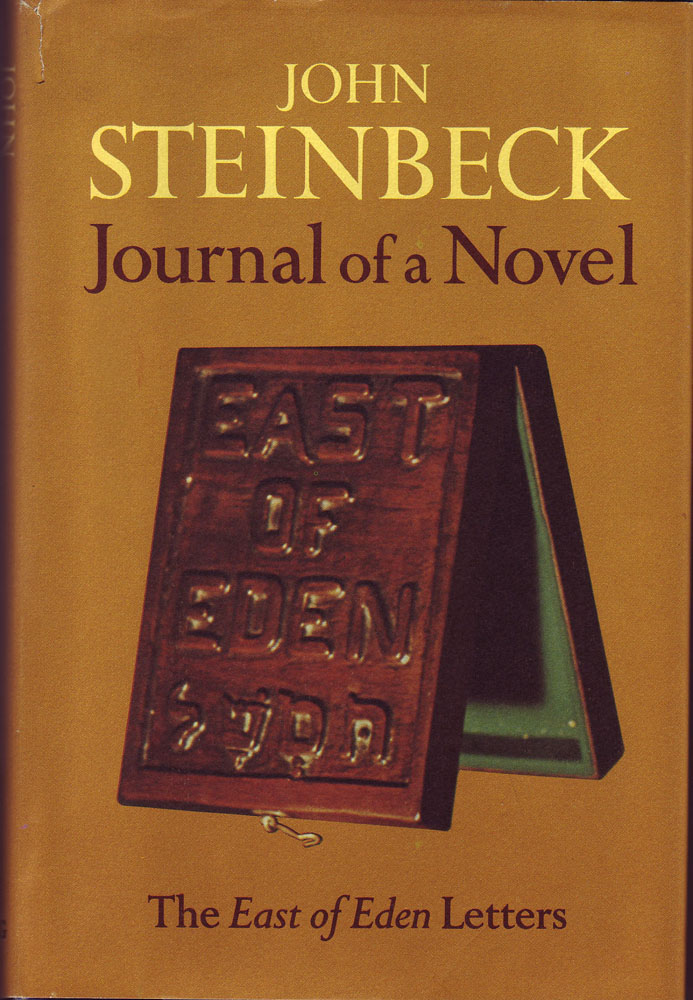
Cover of John Steinbeck's Book "Journal of a Novel"
In this book, Journal of a Novel, 
Steinbeck talks about how he overcame writer's 
block to write his epic novel East of Eden.
John Steinbeck famously stalled starting East of Eden by carving a wooden pencil box for his personally carved pencils. He couldn't begin writing a great novel without having both decent pencils and a handsome box to his crafted artist tools.
     I am not that bad, but I think every writer worth his salt battles with writer's block.
     The problem is not WHAT to write but HOW to write what you want to write. The writer is not usually void of ideas, but once settled on one idea, there comes the conundrum of infinite ways to approach the topic. What's the title? Do I write in the first person? Who is my audience - middle age blue-bloods, or pimply adolescents? Do I use accents or write in plain English prose?

Then, there is the security factor. Do I think the piece is gonna be good or not? Will people read this?
     Then, when the work has started, and your pen is moving at a well-clipped pace, eventually, at some point, there comes a stall. The great lull, I call it. Or just boredom. I think this is why most Master theses and Doctoral dissertations go unfinished.
     "It seemed like a good idea," the grad student laments. What's left: piles of research, jotted notes, emails to directors, and an unfinished manuscript.
Connecting thought to idea to word
to sentence to a paragraph . . . can be daunting.

Sometimes, it is the ending that gets ya. 
     Virginia Woolf famously dreaded ending her novels because it felt like a death. I can relate to the visceral, human connection to a work in progress. The writer feeds his work, his blood, tears, ambition, and time. Ink. Pencil graphite. To finish the opus seems too much like divorce - or even worse, death.
     Woolf finished Between the Acts and sometime later stepped into the stream behind her house, heavy stones sewn into the lining of her blouse.
     Now, I don't think I am that bad. But, I can relate to Woolf's decision. Perhaps she was tired of dying. She had written through many deaths.

I can relate to John Steinbeck, better. 
     It wasn't that he felt like he couldn't create an epic American Genesis, but the task was so monumental maybe he thought he would get bored or give up. Woolf killed herself, by contrast, not because she completed a great piece of work but just because it was completed.
     Once the publisher tidies up the manuscript, the text is no longer yours. Once I press submit, it is as if the narrative births itself and leaves the cage of the author.
     One way I helped alleviate writer's block was to start actively contributing to my blog. Writing a blog entry is a way to floss my writer's teeth. To write and publish automatically is a way to remind myself I can create something that is not monumental but, at the same time, hopefully not trite. I try to aim for funny, pertinent - or just plain good, dammit.

When I am really feeling it, I go to Twitter and microblog. 
     Wow. What a catharsis. I am energized that Roger Ebert feels the same way. He recently wrote a blog piece on why he tweets. I think he writes his blog and tweets a helluva lot because it lubricates his gears so he can step up to the plate for the big stuff.
     Now, you may say, all this is the same thing as carving that wondrous wooden box to put your pencils because you don't want to get into the nitty-gritty of writing. There's a blog post about this, by the way.

But, I instead write something every day rather than nothing.
     So, here's my something.
     Maybe, you can relate? Lemme know, dammit. Why do you write? When do you not write?

5.4.20

Quotation: Mr. Keating from Dead Poets' Society on Writing

In the movie Dead Poets Society, Robin Williams plays the role of private school teacher Mr. Keating — a man who believes words can be bullets. Words matter. Maybe more so now than ever.
Even unintelligible text scribbled on a wall can be an idea.
"No matter what anybody tells you, words and ideas can change the world"
— Mr. Keating, Dead Poets Society (1989)

11.1.20

Flash Fiction: Rocky Embankment Stream of Consciousness

     
     There's a rocky embankment that you're probably not supposed to walk on because it's filled with old age and danger. And of course, I fall flat on my face, and as I'm falling and thinking, “Oh, fudge!” When in danger, time goes in slow motion. I feel my knee pressed against the ground. It’s purple, bruised and I scratch my forearm. It’s nighttime, and I don't know how I’ll be able to climb out of this embankment. I have shorts that I wear in Summer. No pockets - so I had my wallet stuck into my shorts like a silly boy, and I had keys tucked into my shorts, and I had my phone, and everything stuck into my shorts - you know - in the lapel part of your shorts where your M matches the seam, and everything just falls into place. I don't know how I’ll be able to save my sandwich from falling into the rocks, and I had my keys, and I am like “this hurts,” and I’m stuck to the rock, and I don't know how I’ll get out. If I were injured more ... I ‘m lucky, but I'm like, “where's my phone?” I couldn't find my phone, so my phone at this moment is still lodged in the rocks of Lake Champlain. I wait till tomorrow morning to get it, but it's a big long story - the short version is I basically follow my tracks back to the rocky shores of Lake Champlain - and that's been my day so far. Now I'm back in my hotel room telling you the story on my iPad, and hopefully tomorrow morning I will wake up and locate my phone from the rocks so also what's wrong with me because there it is - I found it - inches away from where I fell. I could've walked a few meters more, and there was a path that takes you down into a depthless semigloss lake - that's safe, but “Yeah” - I don't know what’s wrong with me. 
~ transcribed at the scene.